

Los organizadores del Foro Internacional de Periodistas de la Franja y la Ruta 2025, a desarrollarse del 14 al 20 de julio, en Jiangxi; solicitaron a los dirigentes gremiales y periodistas invitados, desarrollar un artículo sobre su “primera impresión” sobre China; este ejercicio también se realizó el año pasado. Compartimos nuestra colaboración correspondiente a 2025.
Representaremos al Colegio Nacional de Licenciados de Periodismo; por la Federación de Asociaciones de Periodistas Mexicanos, FAPERMEX, viajará su presidenta, Eva Guerrero Ríos.
¿CUÁNTAS VECES HAS VISITADO CHINA?
Al referirse a la gran obra de Miguel de Cervantes Saavedra, la pregunta obligada, según algunos expertos debe ser ¿Cuántas veces has leído el Quijote? Ese cuestionamiento puede tener muchas acepciones, desde evaluar los conocimientos de la obra, conocer la relación con la literatura, comprender preferencias, o cualquiera otra que pueda deducirse; sin embargo, la hondura de tal interrogación, es porque ante la profundidad de los conceptos, el vasto vocabulario, las múltiples interpretaciones que pueden hacerse de las citas, pasajes y demás ideas plasmadas, la obra es un abanico de sorpresas que se encuentran cada vez que se recorren las páginas de esa obra literaria.
Para entender y conocer China, sucede exactamente lo mismo. La consulta debe versar sobre ¿cuántas veces se ha estado en China? Y en efecto, quien presuma de conocer esa nación, su historia, su ideología, su sistema gubernamental y económico, el sentir de su pueblo, sus luchas, conquistas y defensas, sus etapas y ahora expansión mundial, forzosamente debe haber pisado ese territorio asiático varias veces.
Y no solo eso; es necesario haber convivido con su gente, con su pueblo, con su vida diaria. Haber platicado con sus legendarios impulsores y convivido con las nuevas generaciones. También se hace necesario haber recibido en otras latitudes y viajado con amigos chinos.
Leer sobre China por supuesto es una obligación. Documentarse, conocer a través del ciberespacio ahora al alcance universal, ayuda y permite abrir el panorama, sin embargo, aterrizar en sus puertos, navegar sus ríos, percibir la inmensidad ligada a la organización, observar la felicidad y el poder adquisitivo, verificar el desarrollo y el formato de gobierno, solo se puede entender, en una primera etapa, al recorrer su territorio.
Por eso sostenemos lo que escribimos hace un año, precisamente previo al encuentro de este Foro de Cooperación Internacional de Periodistas de la Franja y la Ruta, en Chongquing, es imposible hablar en singular para referirse a una primera impresión sobre China, porque cada ocasión que exista la oportunidad de la visita, lo tenemos comprobado, la percepción es completamente distinta; y es que el tiempo parece tener otra velocidad en ese país.
Van algunos ejemplos.
Wuhan y el COVID:
En 2019 estuvimos en Wuhan. A nuestro retorno a México, como al resto del mundo, nos correspondió el largo encierro generado por la pandemia del SARS-COV2, conocido como en coronavirus. Nos correspondió recibir la avasallante información que señalaba precisamente a Wuhan como la ciudad de origen del virus, y a su mercado de mariscos de Huanan como el espacio del primer contagio.
En esa visita conocimos el mercado mayorista, pudimos ver la calidad y frescura de los productos. Nosotros en México, en muchos rincones de nuestra nación, tenemos espacios similares y debemos reconocerlo, muy alejado de las políticas de salubridad de Wuhan.
Era de fácil comprensión que la prensa manipulada y en especial a través del manejo de redes sociales, detectar la campaña de desprestigio emprendida en contra de China. Es sabido que hasta la fecha no existe ninguna certeza científica que demuestre el origen del virus del COVID y mucho menos la posibilidad de señalar un punto con coordenadas geográficas… solo faltaba que nos presentaran vivo al murciélago portador.
Nos correspondió explicar en diversos foros, a través de nuestros programas periodísticos, entrevistas y charlas, detallar la magnificencia de la zona urbana y agrícola, la inmensa infraestructura y sorprendente organización de la región de Hubei.
La historia y la nueva forma de informarse con aportaciones directas de China, registró la eficaz forma de control del mortal virus y las políticas de confinamiento, aunque dolorosas, emprendidas por las autoridades chinas. No está por demás reconocer la velocidad para alcanzar las vacunas CanSino Biologics, Sinopharm y Sinovac, que tantas vidas salvaron.
Shenzhen y su desarrollo:
En 2001 recorrimos por primera ocasión esa zona económica especial; la proyección hacia fortalecer el triángulo con Hong Kong y Macao, recién reintegradas a la soberanía china, era una propuesta difícil de comprender o imaginar. Retornamos en 2014, y aquella primera impresión quedó anulada ante el sorprendente desarrollo ordenado que por impactante, precisamente nos dejó maravillados de encontrar una nueva ciudad. Una vez más, en 2024, aunque solo fue de paso, conocer el nuevo aeropuerto de Shenzhen, nos permitió entender que su infraestructura hablaba del resto de la ciudad y su rápido crecimiento.
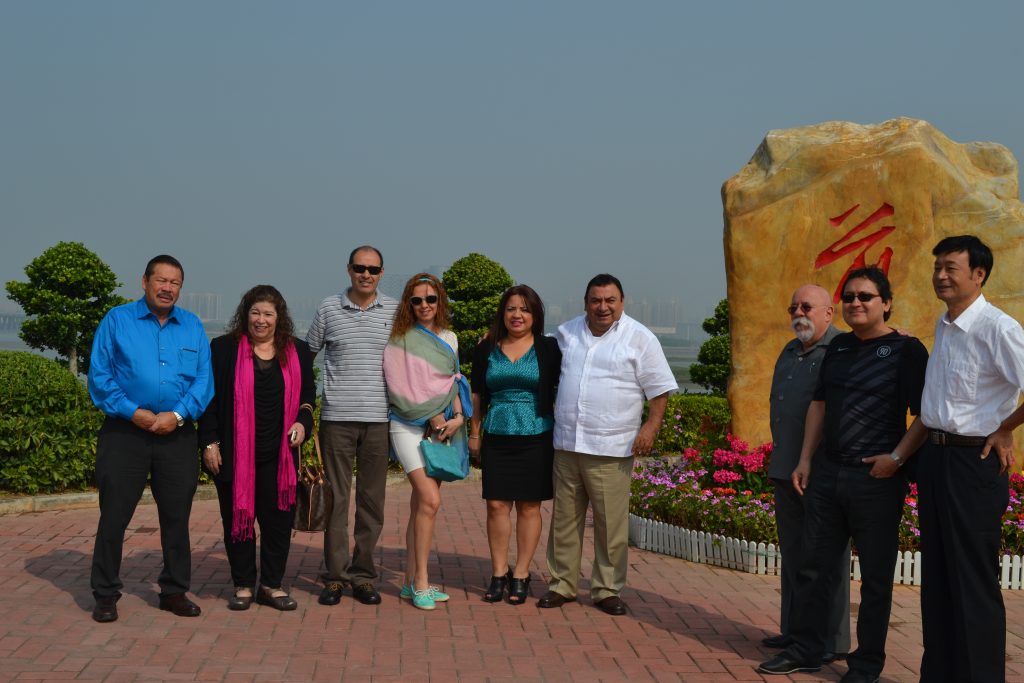
No está por demás compartir los comentarios en entregas periodísticas de mi padre Teodoro Rentería Arróyave, actual presidente del Colegio Nacional de Licenciados en Periodismo, CONALIPE, exactamente en el mismo sentido; a él le correspondió conocer la antigua ciudad de pescadores y retornar en 2001; sus historias sobre el desenvolvimiento y proyección solo las logramos comprender al vivir las diversas visitas en los lapsos descritos.
Trenes de alta velocidad:
El crecimiento de trenes en México experimentó un fuerte declive y luego una pausa a partir de la década de 1990, principalmente debido a la privatización de Ferrocarriles Nacionales de México (F.N.M.) en 1995 y su posterior desaparición en 2001.
En esa década tuvimos la oportunidad de viajar en el denominado Tren Bala desde Osaka hacia Kioto en Japón; de Madrid a Sevilla en el AVE (Alta Velocidad Española). En 2019 recorrimos la ruta Beijing – Tianjin en el tren de alta velocidad; asimismo visitamos los talleres de mantenimiento y de elaboración de alimentos en la capital China.

En ese entonces, previo a nuestro viaje, en 2014 el gobierno de México canceló el otorgamiento de la concesión para la construcción de la vía férrea para la habilitación de un tren de alta velocidad entre la Ciudad de México y Querétaro, adjudicado al consorcio liderado por CRCC e integrado por la también paraestatal china CSR Corporation Limited y las mexicanas GIA, Prodemex, Teya y GHP Infraestructura Mexicana.
En nuestra visita a la oficina central de la China High Speed Railway, pudimos cuestionar al señor HUO Baoshi, director del Departamento de Ciencia y Tecnología, sobre la decisión tomada por México. Su respuesta fue contundente: “nos pedían cobrar más de lo que valía el proyecto”.
Nuestra impresión fue doble: percatarnos de la gigante infraestructura y reto de conectividad por este medio de la población en China, y nuestra sorpresa de que nuestro país haya dejado escapar un proyecto de movilidad tan valioso. Este año, el gobierno mexicano anunció que el Agrupamiento de Ingenieros Felipe Ángeles de la Secretaría de la Defensa Nacional será el encargado de construir el tren de pasajeros que conectará la Ciudad de México con Querétaro. El proyecto se desarrolla bajo el esquema de obra pública.
Aniversario de Beijing. Desfile militar.
En octubre de 2019 acudimos a Beijing y nos correspondió estar presentes en el desfile conmemorativo del 70 Aniversario de la fundación de la República Popular de China; desde un privilegiado lugar en primera fila en la Plaza Tianananmen, además de haber escuchado de viva voz al presidente Xi Jinping, y haber observado su transportación para dar inicio al arranque de los contingentes, conocer la fortaleza militar sobrepasa cualquier idea.
Sabemos y entendemos que China, al igual que México, son países portadores de un mensaje de paz, pero también recios y firmes en la defensa de su Soberanía. La historia de ambos países, a lo largo de los siglos, han conocido de la permanente zozobra de las invasiones, mucha sangre corrió para conquistar y mantener sus autonomías.

Hoy, en medio de esta batalla comercial emprendida por Estados Unidos, China se ha levantado ante el mundo como una opción de equilibrio y alternativa de desarrollo. Por eso, la impresión de ese desfile, de las cuales conservamos una foto de cada uno de los vehículos del Ejército y de sus contingentes sociales, generan la expectativa de conservar de poder crecer en armonía acompañados de un país poderoso pero con la firme y definida cultura de propagar y defender la paz.
Chongqing y su oferta mundial.
Conocer este gran polo de desarrollo, ubicado como un importante centro logístico, conectado a través de rutas terrestres, marítimas y aéreas a numerosos países a través del Nuevo Corredor Internacional de Comercio Terrestre-Marítimo, ha sido una de las experiencias más impactantes.
Al igual que nuestra visita a Wuhan, esta parte también bañada por el Yangtsé, solo puede comprenderse al recorrerla. Su desarrollo por regiones, respeto a la naturaleza, cuidado del medio ambiente, orden y fortaleza económica, sorprende al más viajado y al más avezo en los negocios.
Encontrarse en una región de más de 30 millones de habitantes y no haber padecido un solo retraso en la transportación, no percibir contaminación en el ambiente ni visual, no encontrar grafiti y desechos en sus calles, es una gran experiencia.
No está por demás, al igual que Wuhan, haber vivido la experiencia de navegar por el caudaloso río y ver el espectáculo de regala la luz led que adorna los inmensos edificios que causan un pasaje que por artificial, no merma en su belleza. Es un equilibrio perfecto entre naturaleza y urbanismo.
Nos llevaría muchas páginas narrar la serie de impresiones de esta importante visita, por la frescura del recuerdo, y las múltiples sorpresas ahí vividas.
Pero no queremos dejar pasar algo que nos parece interesante. En occidente la influencia norteamericana, ante sus avances tecnológicos y dominio de la conectividad digital, no permite comprender una vida sin las redes sociales así como de los sistemas de mensajería dependientes de Estados Unidos; haber ocupado el WeChat, pero más que eso, observar la serie de utilidades que en China se desarrollan desde esa aplicación, fue la impresión que hasta este momento vemos muy lejana de vivir en estas latitudes.
Prácticamente el uso del dinero en efectivo se ha anulado en China, todas las generaciones ocupan sus teléfonos inteligentes para la vida diaria; y cuando decimos la vida diaria, es en todos los servicios posibles. Precisamente percatarse del poder adquisitivo o en otras palabras, la accesibilidad a la vida digital de la mayor cantidad de la población hace comprender el desarrollo y desenvolvimiento de su sociedad.
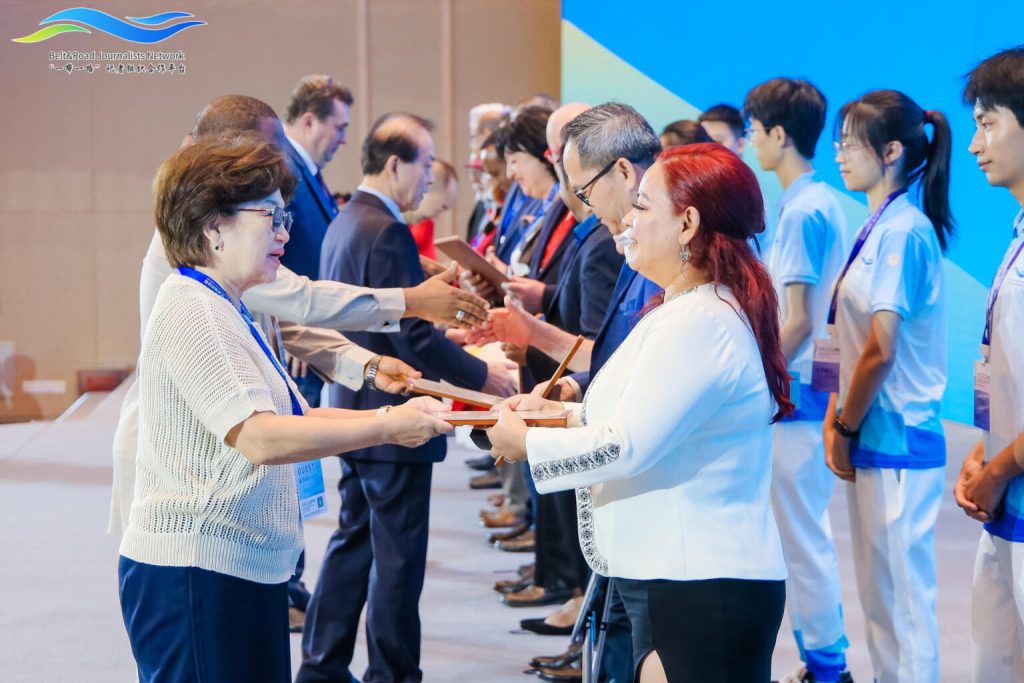
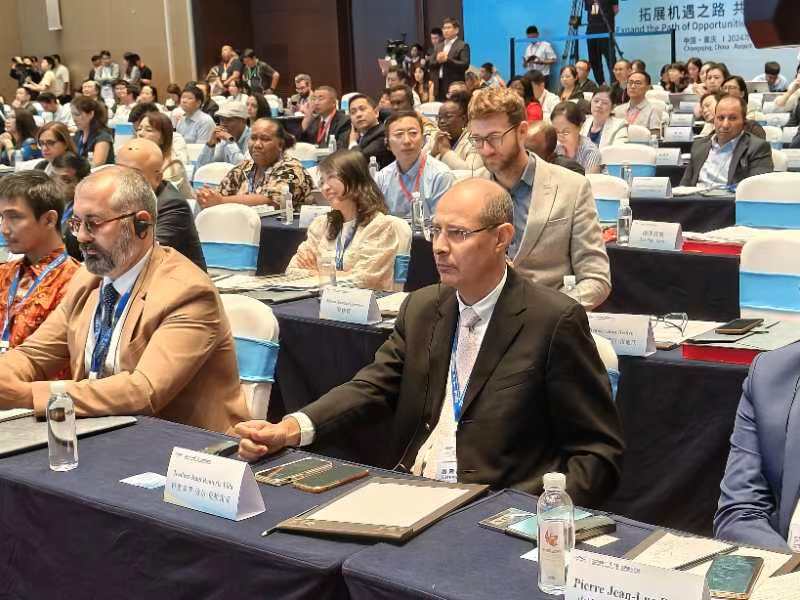
Actualidad.
La postura de China ante el mundo, en esta nueva etapa del orden económico mundial, fue tan sorpresiva como la serie de decisiones unilaterales del presidente de Estados Unidos; sin embargo el mensaje es opuesto, mientras China invita a la apertura y a la sana competencia, Estados Unidos amenaza con un mercado controlado y sometido.
Quien no conocía China y su avance económico, en esta etapa seguramente ha tenido su primera impresión ante el mensaje de quien se ubica como el “gigante asiático”. La firmeza en las decisiones del gobierno chino ante, primero las amenazas y después la aplicación de aranceles y demás estrategias de Norteamérica, ha generado en efecto un nuevo orden mundial soportado en la capacidad e infraestructura para poder hacer comercio mundial.
Aunque la conformación del BRICS+ tiene ya una historia y una ruta caminada desde 2008, en estos días la gran población ha dimensionado el significado de la reunión de las entonces economías emergentes y la importancia de generar un polo global autónomo a Estados Unidos. Los países fundadores Brasil, Rusia, India y China, después Sudáfrica, son grandes territorios de gran potencial en todos los sentidos.
De estas economías, en especial la China, si es que algún día fue “emergente”; ahora se levanta como un gran soporte de este grupo que de contar con 4 naciones aliadas hoy es un potente mercado con 10 estados miembros y 11 miembros asociados.
La impresión de China al mundo ha cambiado. Hoy se presenta como el país de la apertura, de la competencia, del comercio, del avance tecnológico, como aliado, con fronteras abiertas, con gran infraestructura, con oportunidades, con un pueblo inteligente, y muchas otras virtudes.
México es aliado de toda la vida; las relaciones diplomáticas y comerciales siempre se han respetado y fortalecido con el paso de los años.
Otro dicho, y lo citamos porque en China existen una infinidad de ellos, que marcan el desarrollo de esa nación, establece el permanente asedio del vecino del norte: “México tan lejos de Dios y tan cerca de Estados Unidos”.
En ese sentido, hoy la distancia física, la que marca el planeta tierra entre China y México, se ha acortado de muchas formas; los kilómetros son los mismos, pero los medios para cruzarlos son muy diversos y están al alcance.
Sirva esta entrega para manifestar nuestro deseo de que el orden mundial, en todos los sentidos, se fortalezca. Pero lo más importante, que el crecimiento y el desarrollo siempre esté soportado por la paz.
HOW MANY TIMES HAVE YOU VISITED CHINA?
By Teodoro Rentería Villa.
Vice-president of the National College of Graduates in Journalism. CONALIPE.
Mexico.
When referring to the great work of Miguel de Cervantes Saavedra, the obligatory question, according to some experts, must be: How many times have you read Don Quixote? This questioning can have many meanings, from evaluating the knowledge of the work, knowing the relationship with literature, understanding preferences, or any other that can be deduced; However, the depth of such an interrogation is because in the face of the depth of the concepts, the vast vocabulary, the multiple interpretations that can be made of the quotations, passages and other ideas captured, the work is a range of surprises that are found every time the pages of that literary work are turned.
To understand and get to know China, exactly the same thing happens. The query should be about how many times have you been to China? And indeed, whoever presumes to know that nation, its history, its ideology, its governmental and economic system, the feelings of its people, its struggles, conquests and defenses, its stages and now world expansion, must necessarily have set foot on that Asian territory several times.
And not only that; it is necessary to have lived with its people, with its people, with its daily life. Having talked with its legendary promoters and lived with the new generations. It is also necessary to have received in other latitudes and traveled with Chinese friends.
Reading about China is of course a must. Documenting oneself, knowing through cyberspace now within universal reach, helps and allows us to open up the panorama, however, landing in its ports, navigating its rivers, perceiving the immensity linked to the organization, observing happiness and purchasing power, verifying the development and the format of government, can only be understood, in a first stage, by touring its territory.
That is why we maintain what we wrote a year ago, precisely prior to the meeting of this Forum for International Cooperation of Journalists of the Belt and Road, in Chongqing, it is impossible to speak in the singular to refer to a first impression of China, because every time there is the opportunity to visit, we have proven it, the perception is completely different; And it is that time seems to have another speed in that country.
Here are some examples.
Wuhan and COVID:
In 2019 we were in Wuhan. Upon our return to Mexico, as to the rest of the world, we were dealt with the long confinement generated by the SARS-COV2 pandemic, known as the coronavirus. It was up to us to receive the overwhelming information that pointed precisely to Wuhan as the city of origin of the virus, and to its seafood market in Huanan as the space of the first contagion.
On that visit we got to know the wholesale market, we were able to see the quality and freshness of the products. We in Mexico, in many corners of our nation, have similar spaces and we must recognize it, far removed from the health policies of Wuhan.
It was easy to understand that the manipulated press, and especially through the management of social networks, detected the smear campaign waged against China. It is known that to date there is no scientific certainty that proves the origin of the COVID virus and much less the possibility of pointing out a point with geographical coordinates… All that remained was for them to present us alive with the carrier bat.
It was up to us to explain in various forums, through our journalistic programs, interviews and talks, to detail the magnificence of the urban and agricultural area, the immense infrastructure and amazing organization of the Hubei region.
History and the new way of getting information with direct contributions from China, recorded the effective way of controlling the deadly virus and the confinement policies, although painful, undertaken by the Chinese authorities. It is worth recognizing the speed to reach the CanSino Biologics, Sinopharm and Sinovac vaccines, which saved so many lives.
Shenzhen and its development:
In 2001 we toured that special economic zone for the first time; the projection towards strengthening the triangle with Hong Kong and Macau, recently reintegrated into Chinese sovereignty, was a difficult proposal to understand or imagine. We returned in 2014, and that first impression was cancelled out by the surprising orderly development that, as shocking, left us amazed to find a new city. Once again, in 2024, although it was only in passing, getting to know the new Shenzhen airport, allowed us to understand that its infrastructure spoke to the rest of the city and its rapid growth.
It is not superfluous to share the comments in journalistic deliveries of my father Teodoro Rentería Arróyave, current president of the National College of Graduates in Journalism, CONALIPE, in exactly the same sense; it was his turn to visit the old fishing city and return in 2001; Their stories about the development and projection can only be understood by living the various visits in the periods described.
High-speed trains:
Train growth in Mexico experienced a sharp decline and then a pause from the 1990s onwards, mainly due to the privatization of Ferrocarriles Nacionales de México (F.N.M.) in 1995 and its subsequent demise in 2001.
In that decade we had the opportunity to travel on the so-called Bullet Train from Osaka to Kyoto in Japan; from Madrid to Seville on the AVE (Spanish High Speed). In 2019 we traveled the Beijing – Tianjin route on the high-speed train; we also visited the maintenance and food processing workshops in the Chinese capital.
At that time, prior to our trip, in 2014 the government of Mexico canceled the concession for the construction of the railway for the habilitation of a high-speed train between Mexico City and Querétaro, awarded to the consortium led by CRCC and made up of the also Chinese parastatal CSR Corporation Limited and the Mexican GIA. Prodemex, Teya and GHP Infraestructura Mexicana.
During our visit to the headquarters of the China High Speed Railway, we were able to question Mr. HUO Baoshi, director of the Department of Science and Technology, about the decision taken by Mexico. His answer was blunt: “they asked us to charge more than the project was worth.”
Our impression was twofold: to realize the gigantic infrastructure and challenge of connectivity by this means of the population in China, and our surprise that our country has let such a valuable mobility project slip away. This year, the Mexican government announced that the Felipe Ángeles Engineers Association of the Ministry of National Defense will be in charge of building the passenger train that will connect Mexico City with Querétaro. The project is developed under the public works scheme.
Beijing anniversary. Military parade.
In October 2019 we went to Beijing and it was our turn to be present at the commemorative parade of the 70th Anniversary of the founding of the People’s Republic of China; from a privileged place in the front row in Tiananmen Square, in addition to having listened to President Xi Jinping in person, and having observed his transportation to begin the start of the contingents, knowing the military fortress surpasses any idea.
We know and understand that China, like Mexico, are countries that carry a message of peace, but also strong and firm in the defense of their sovereignty. The history of both countries, over the centuries, has known the permanent anxiety of invasions, a lot of blood flowed to conquer and maintain their autonomies.
Today, in the midst of this trade battle waged by the United States, China has risen to the world as a balancing option and development alternative. For this reason, the impression of that parade, of which we keep a photo of each of the vehicles of the Army and its social contingents, generates the expectation of being able to grow in harmony accompanied by a powerful country but with the firm and defined culture of propagating and defending peace.
Chongqing and its global offer.
Getting to know this great development pole, located as an important logistics center, connected through land, sea and air routes to numerous countries through the New International Land-Sea Trade Corridor, has been one of the most impactful experiences.
Like our visit to Wuhan, this part also bathed by the Yangtze, can only be understood by walking through it. Its development by regions, respect for nature, care for the environment, order and economic strength, surprises the most traveled and the most avid in business.
Being in a region of more than 30 million inhabitants and not having suffered a single delay in transportation, not perceiving pollution in the environment or visual, not finding graffiti and waste in its streets, is a great experience.
It is not superfluous, like Wuhan, to have lived the experience of navigating the mighty river and seeing the spectacle of the LED light that adorns the immense buildings that cause a passage that, although artificial, does not diminish in its beauty. It is a perfect balance between nature and urbanism.
It would take us many pages to narrate the series of impressions of this important visit, due to the freshness of the memory, and the many surprises experienced there.
But we don’t want to miss something that we find interesting. In the West, the influence of the United States, given its technological advances and dominance of digital connectivity, does not allow us to understand a life without social networks as well as messaging systems dependent on the United States; having occupied WeChat, but more than that, observing the series of utilities that are developed in China from that application, was the impression that until this moment we see very far from living in these latitudes.
The use of cash has practically been nullified in China, all generations use their smartphones for daily life; and when we say daily life, it is in all possible services. Precisely realizing the purchasing power or in other words, the accessibility to digital life of the largest number of the population makes us understand the development and development of their society.
Present.
China’s stance before the world, in this new stage of the world economic order, was as surprising as the series of unilateral decisions of the president of the United States; however, the message is opposite, while China invites openness and healthy competition, the United States threatens a controlled and subjugated market.
Those who did not know China and its economic progress, at this stage have surely had their first impression of the message of the one who is positioned as the “Asian giant”. The firmness of the Chinese government’s decisions in the face of, first the threats and then the application of tariffs and other strategies from North America, has in effect generated a new world order supported by the capacity and infrastructure to be able to do world trade.
Although the formation of BRICS+ already has a history and a path traveled since 2008, these days the large population has dimensioned the significance of the meeting of the then emerging economies and the importance of generating a global pole autonomous from the United States. The founding countries Brazil, Russia, India and China, then South Africa, are great territories of great potential in every sense.
Of these economies, especially China, if it was ever “emerging”; Now it stands as a great support for this group that from having 4 allied nations today is a powerful market with 10 member states and 11 associate members.
China’s impression of the world has changed. Today it presents itself as the country of openness, competition, trade, technological progress, as an ally, with open borders, with great infrastructure, with opportunities, with an intelligent people, and many other virtues.
Mexico is a lifelong ally; Diplomatic and commercial relations have always been respected and strengthened over the years.
Another saying, and we quote it because in China there are an infinity of them, which mark the development of that nation, establishes the permanent siege of the neighbor to the north: “Mexico so far from God and so close to the United States.”
In this sense, today the physical distance, the one that marks planet earth between China and Mexico, has been shortened in many ways; The kilometers are the same, but the means to cross them are very diverse and within reach.
May this dedication serve to express our desire that the world order, in every sense, be strengthened. But most importantly, that growth and development is always supported by peace.


